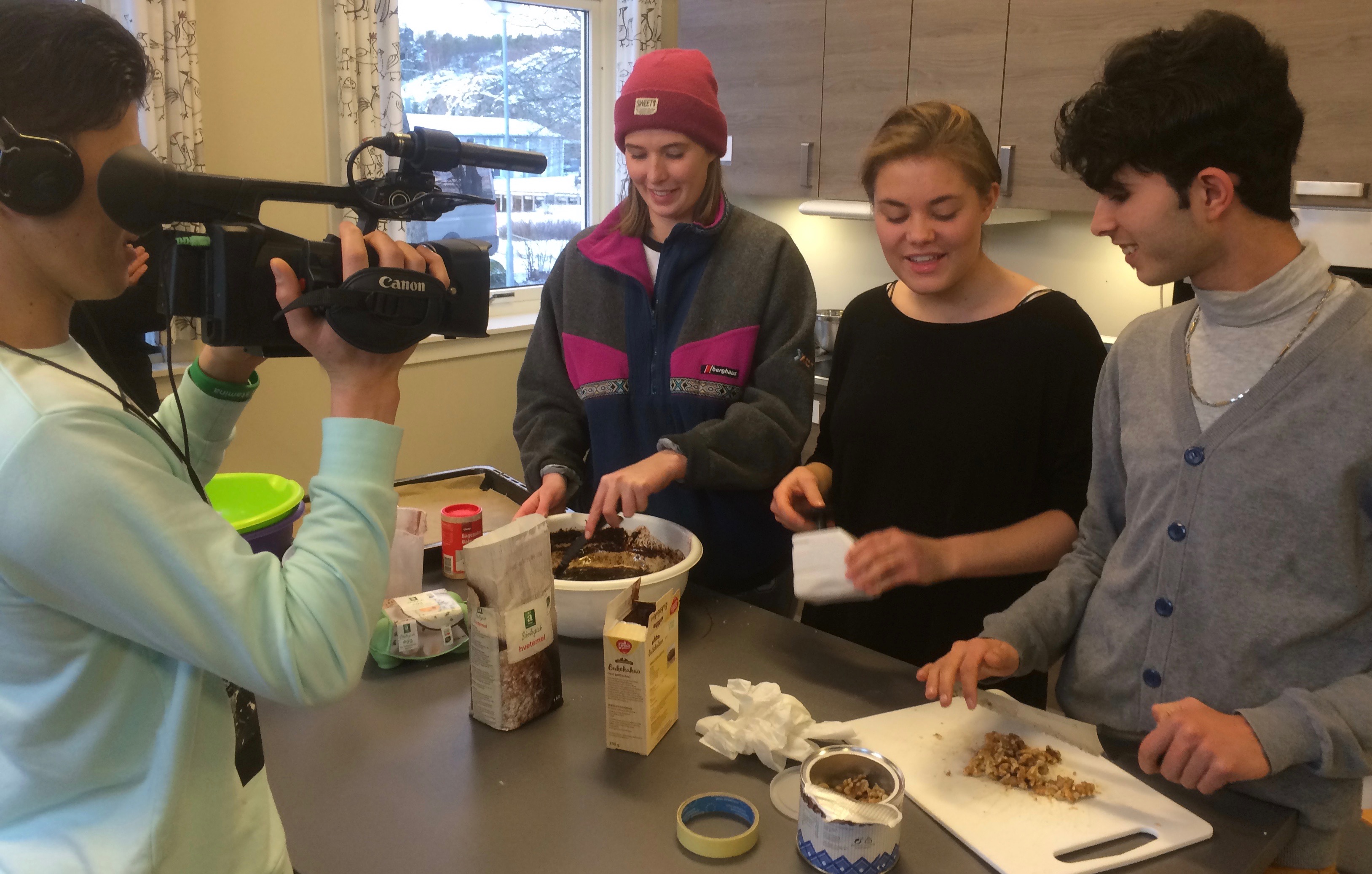
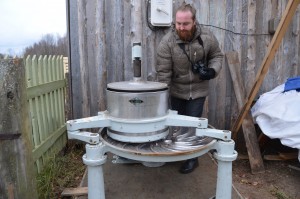
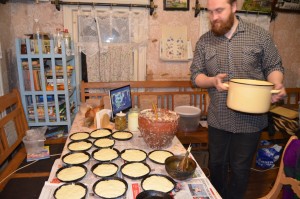
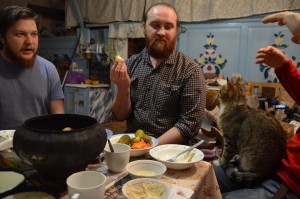
During November I filmed and taught film-making on two different and amazing workshops for HATS, Hålogaland Amatørteaterselskap. The first was at Folkehøgskolen 69°Nord, an outdoor activities school in Kabelvåg Lofoten. This workshop was with the artist Eva Bakkeslett and the story teller Ellen Martha Jerstad. Over an action packed weekend a mixture of refugees, locals and students from the school baked a wide variety of bread together, had story telling and filmmaking workshops and got to know each other. We all prepared for a party open to everyone with incredible food from 5 countries, music and dance. See my film for hats.no here.
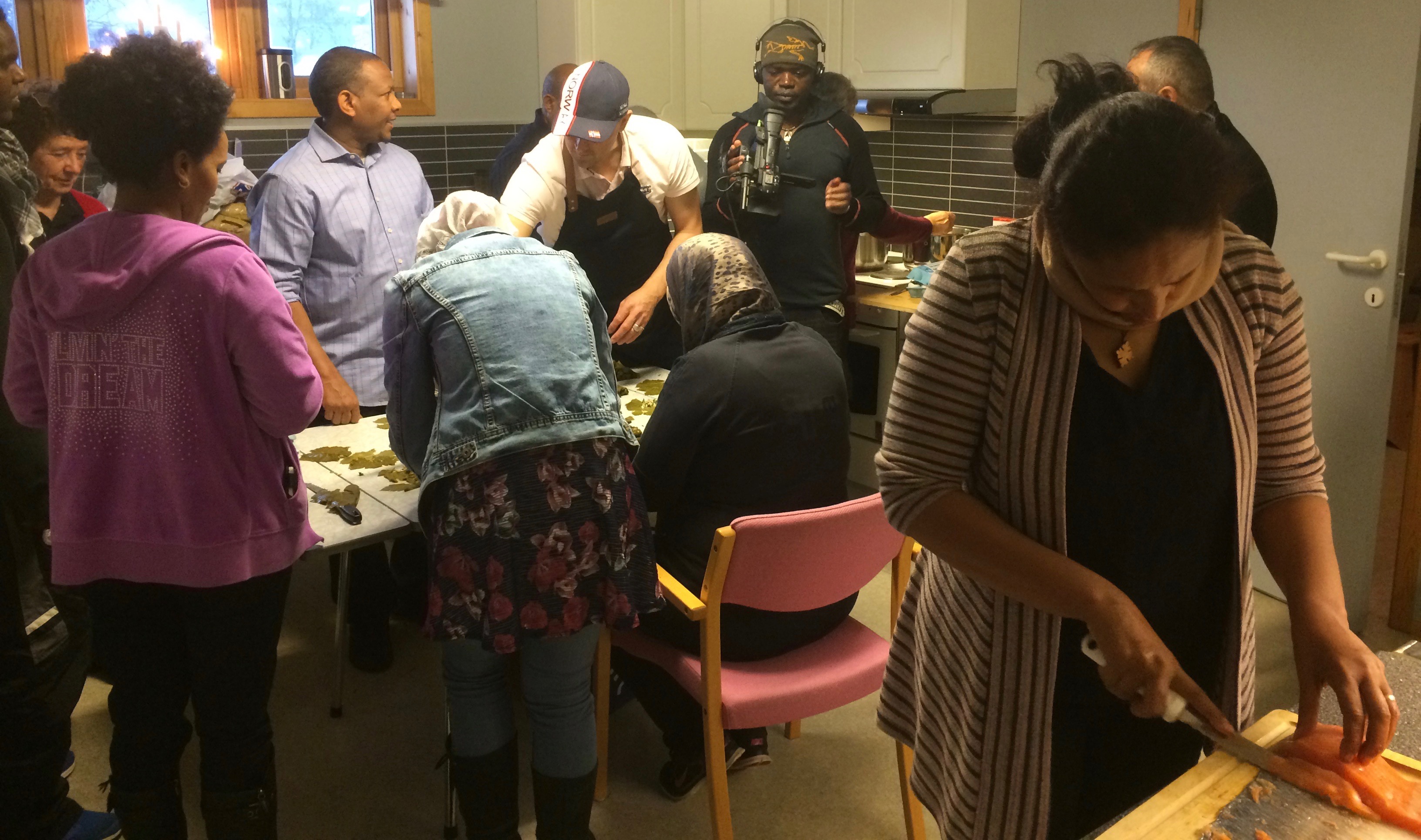
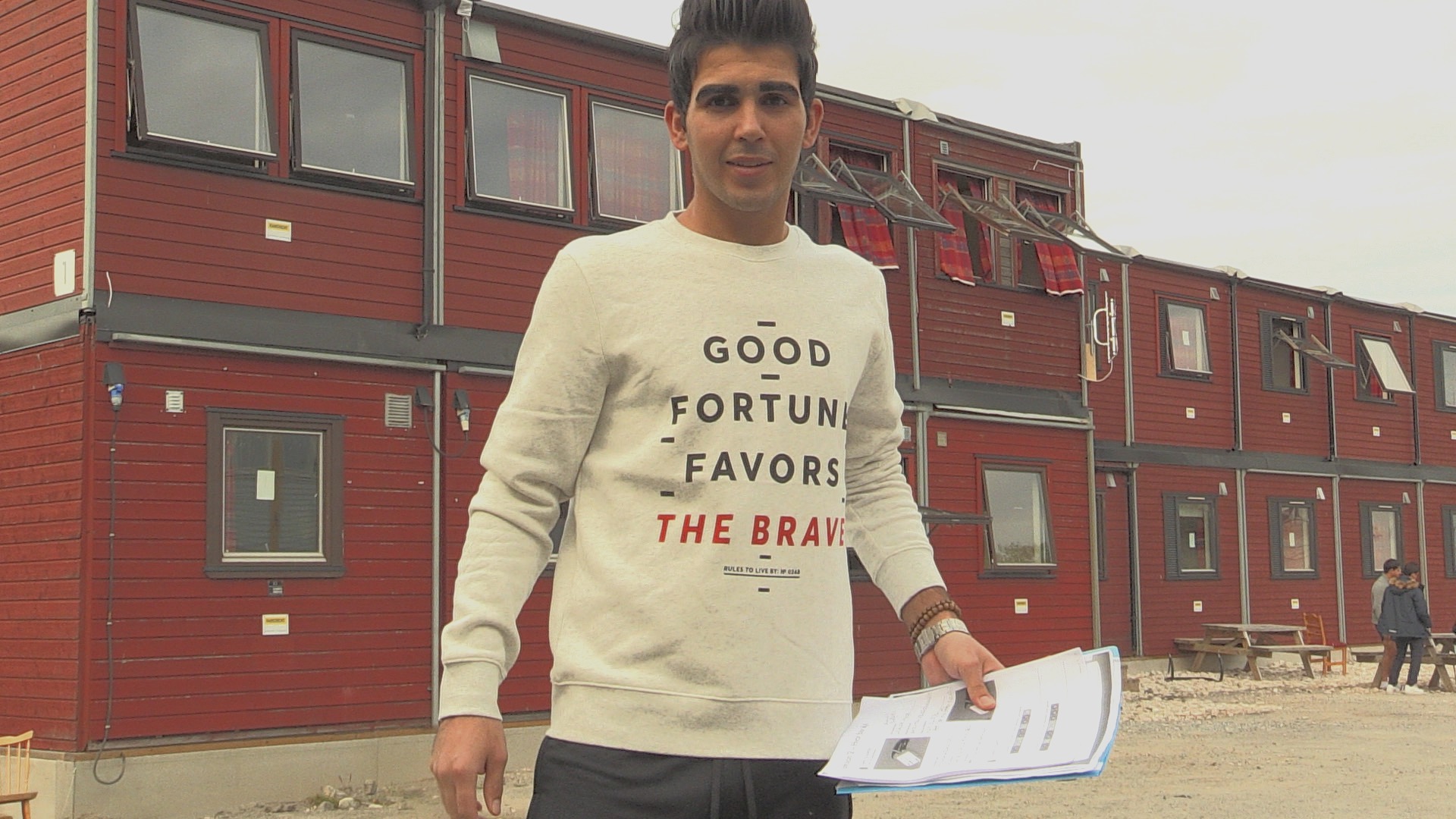
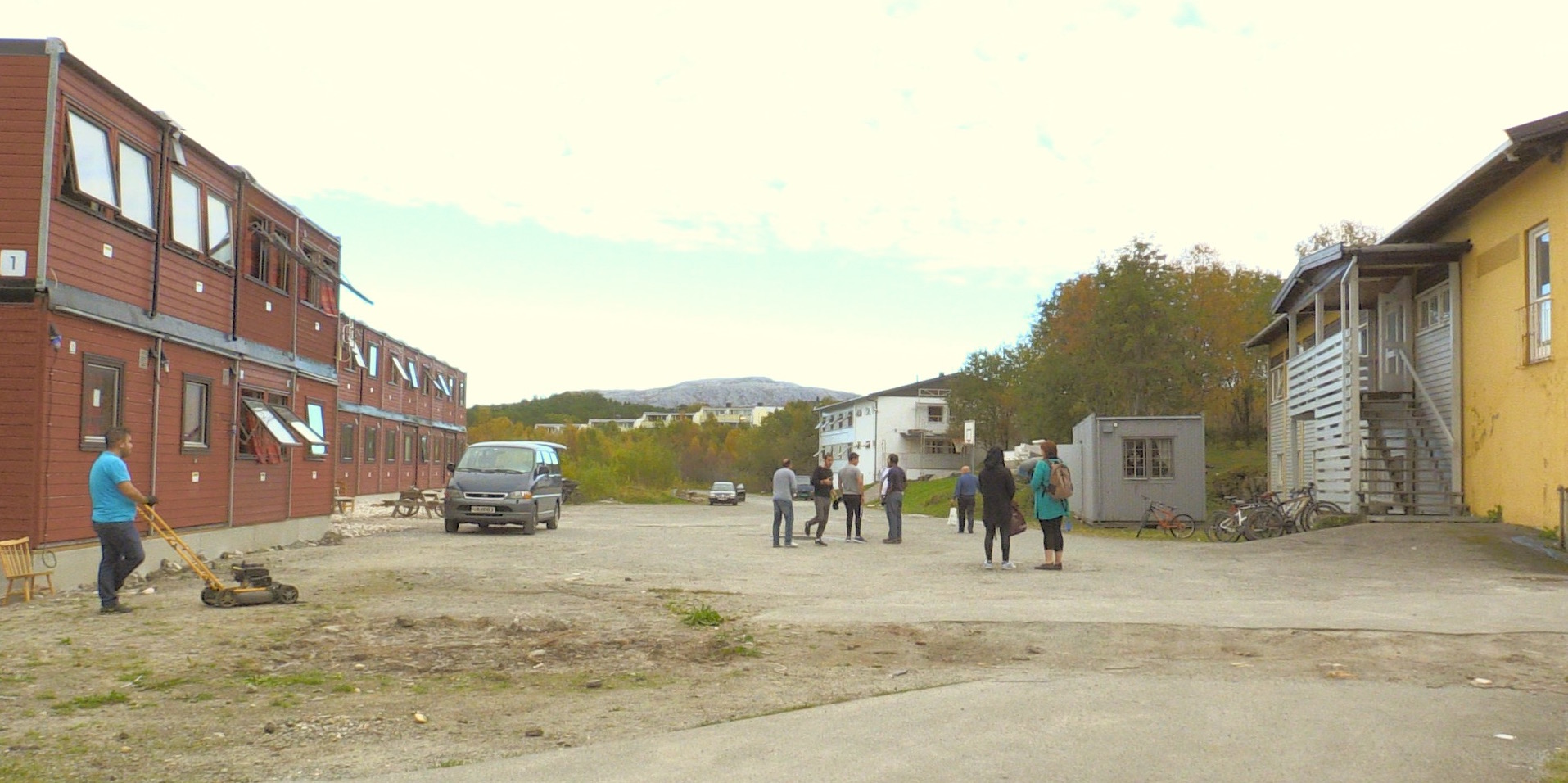
The second weekend was in Setermoen, Troms and produced by Liv Bangsund who runs Tromsø folkekjøkken and several other local organisations. People from the local refugee centre from Syria, Eritrea, Somalia, Angolia and Afghanistan created a feast for the locals. Here is a film made by myself and 2 of the refugees.
Where the bees swarm
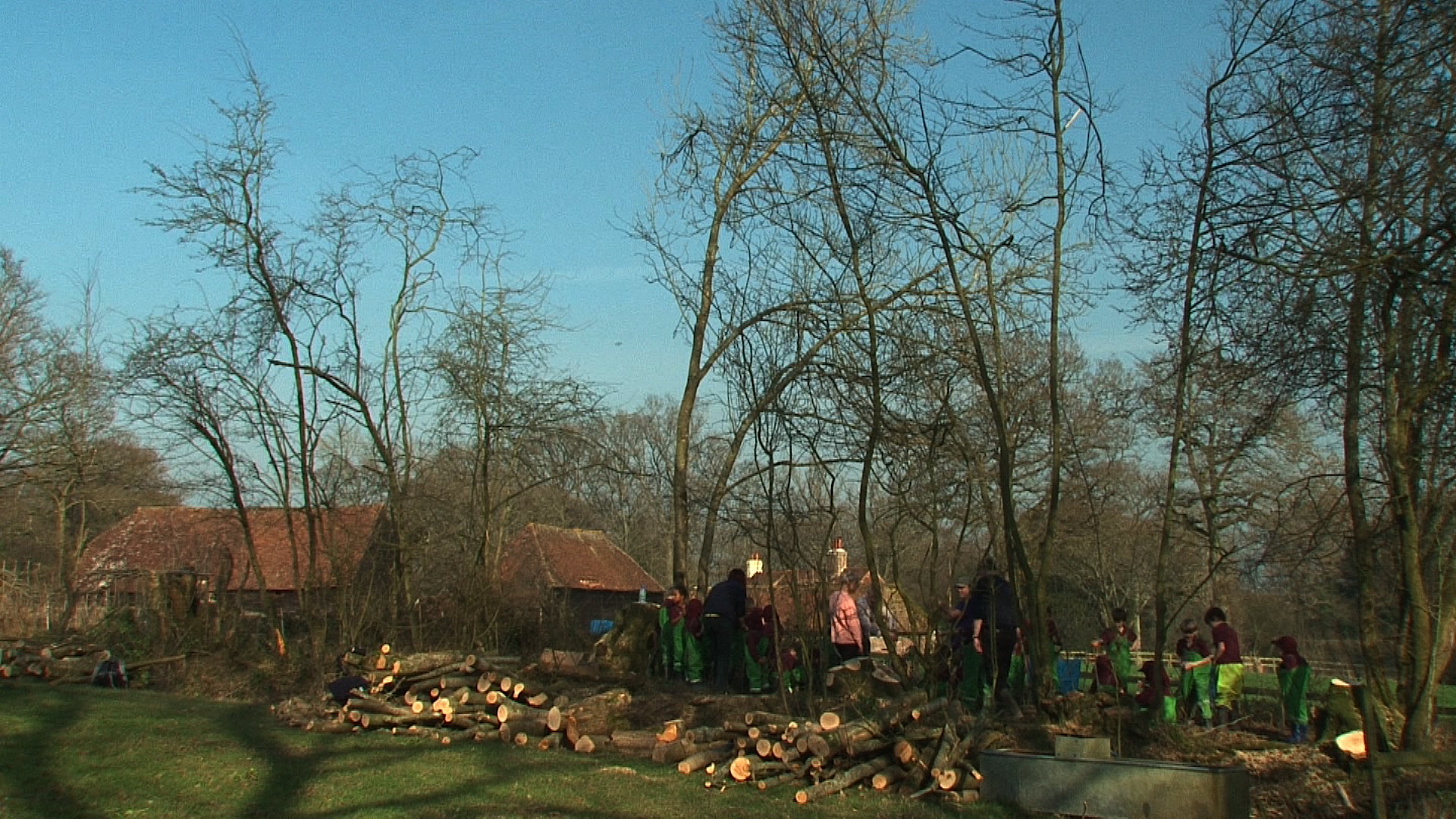
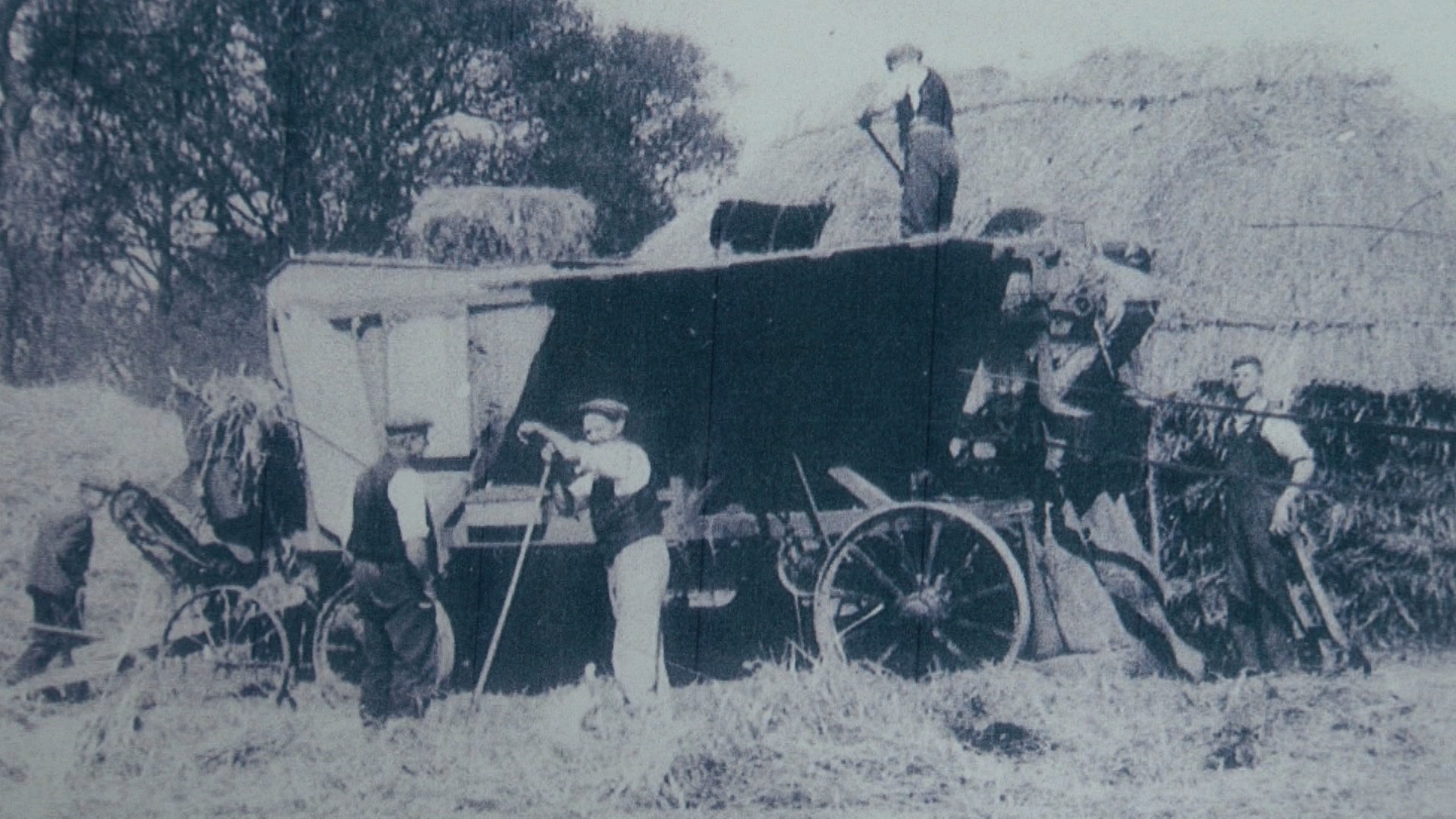
I will finally be screening my documentary this October 2016 about an ancient mixed farm in South West Surrey and its connections to to the natural and human communities surrounding it. Please check my Facebook page for screening dates.
WHERE THE BEES SWARM is a documentary about the origins, history, influence, present running and challenges facing Imbhams Farm. Imbhams is one of the oldest farms in South West Surrey still in operation and also the base for local food producers, Imbhams Farm Granary. The film comprises interviews with a wide variety of people connected to the farm, both present and past, together with contemporary life on the farm, archive footage, photos and maps. The huge value of this and other rural institutions like village pubs and shops to the local community is widely recognised. This film shows the cultural importance of such places, argues for their survival and creates a record of the farm in the present day.
Today the farm is home to http://www.imbhamsfarmgranary.com/ producing fresh local grains for bread makers.
SCENEKUNST PÅ ASYLET
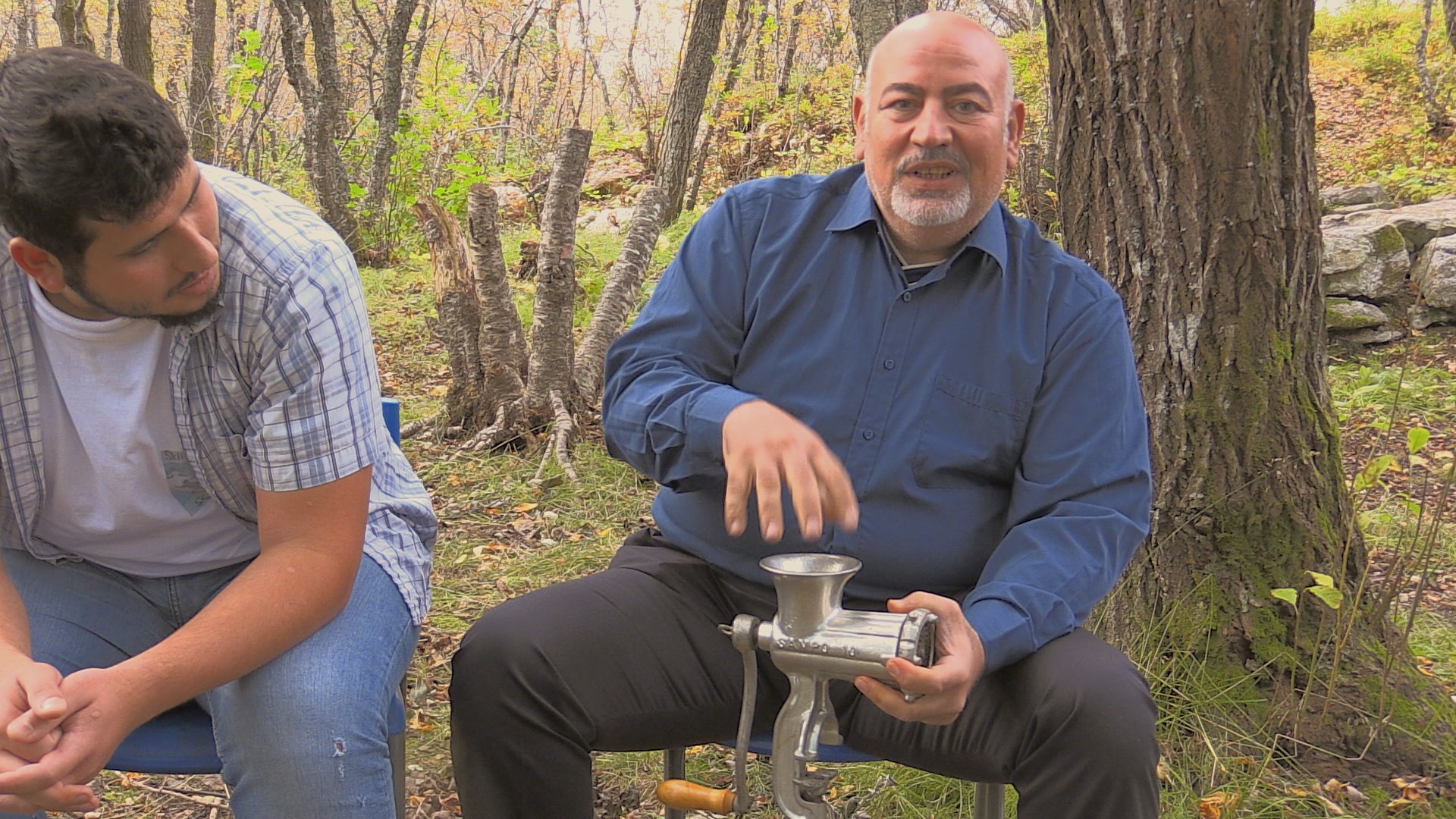
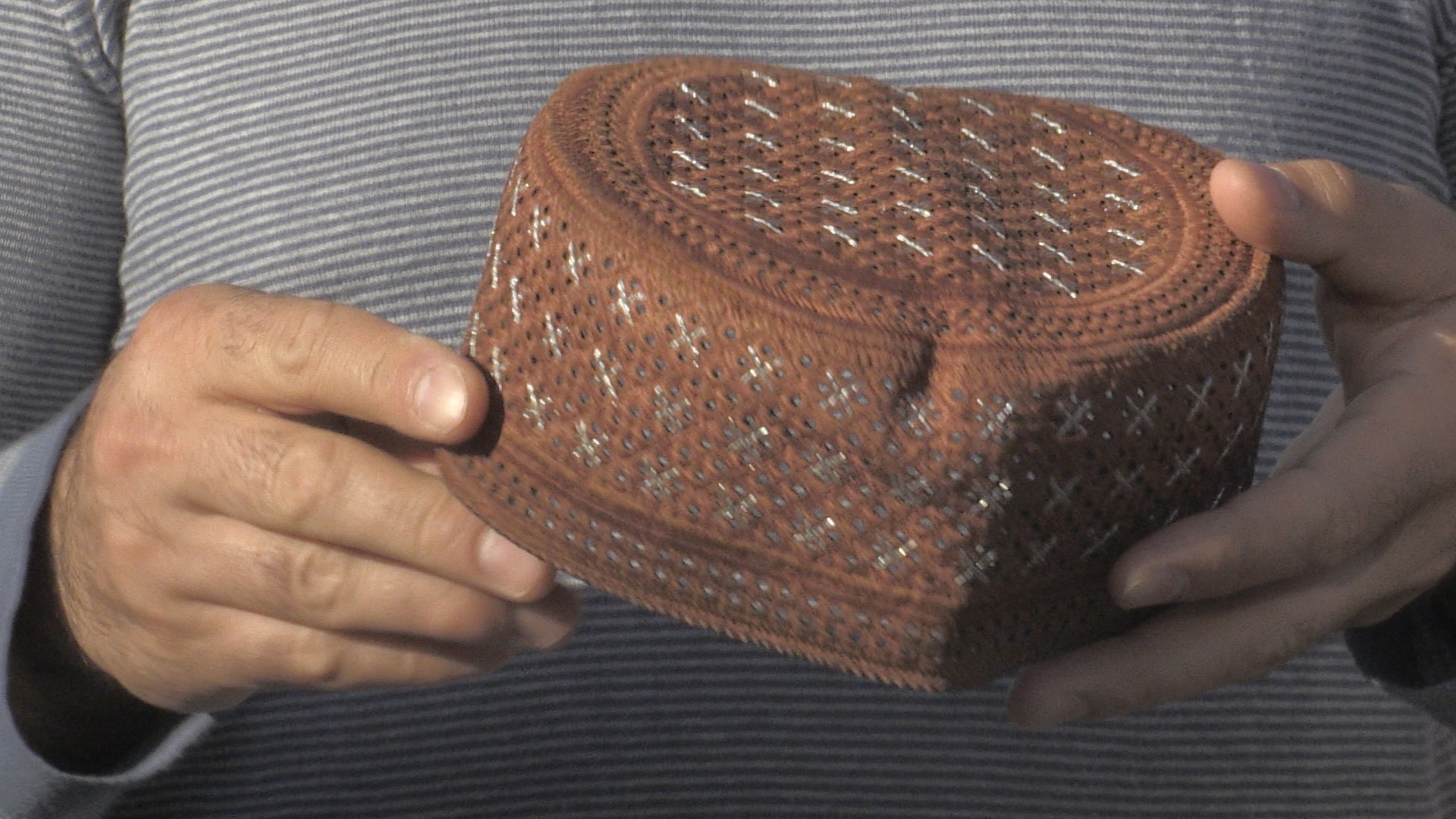
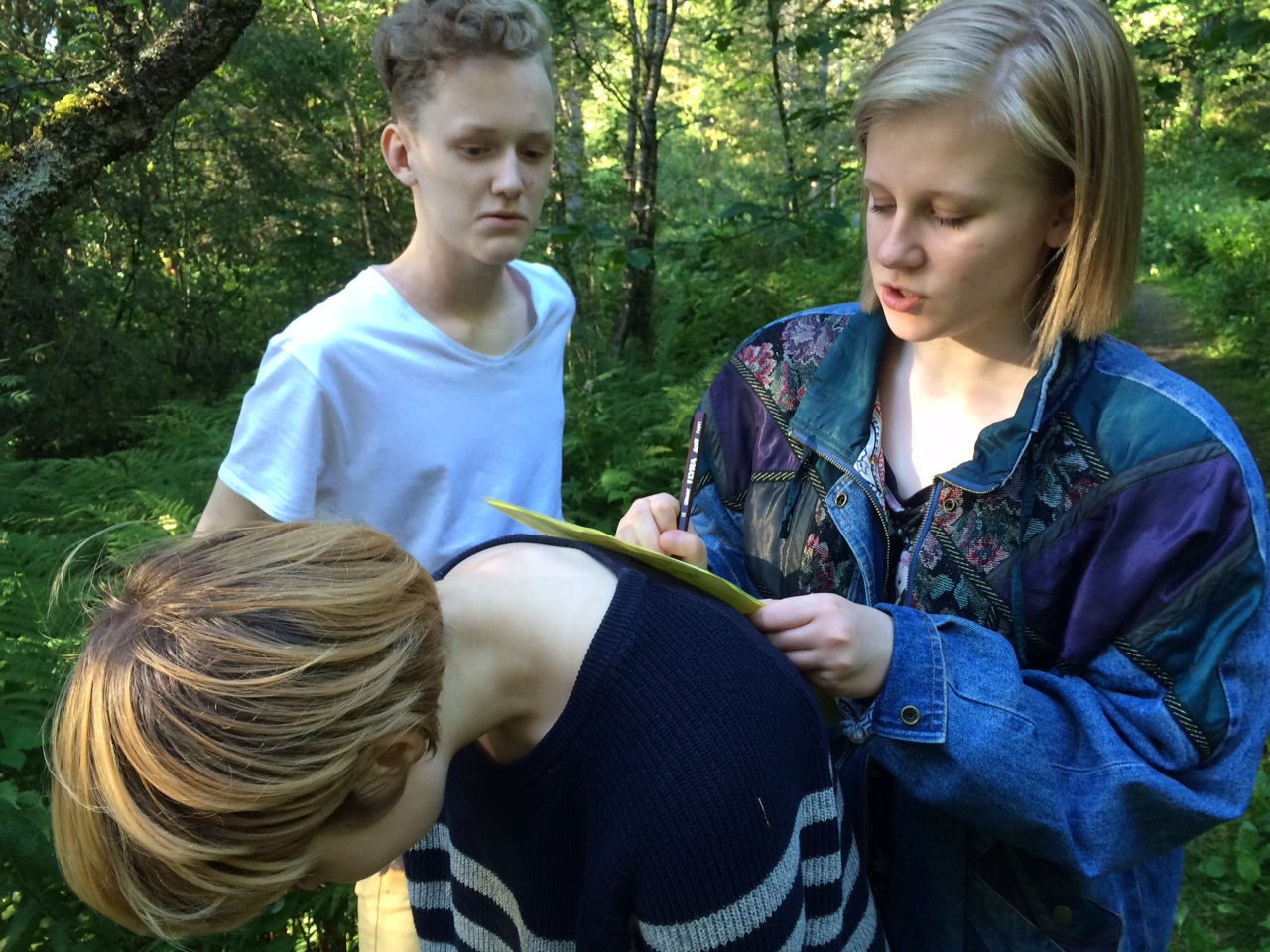
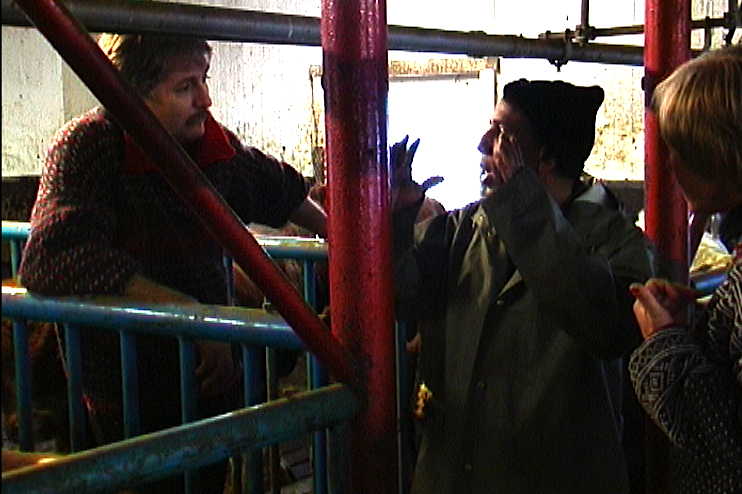
I have recently given a workshop in film and theatre with drama instructor Eline Petrine Johansen. We spent 4 days at Tverlandet refugee centre near Bodø Norway with 15 refugees from Syria, Ethiopia, Afghanistan and Iraq. We were warmly welcomed by people who have had traumatic experiences and now live in limbo hoping to somewhere rebuild their lives. We did many physical theatre exercises working as a group. On day 2 we asked people to bring in an object that is of significance for them. In the woods behind the buildings in

September sun everyone had the opportunity to film each other and tell the story of their keepsakes, all objects from their home countries. 
This was a powerful experience and some told stories of significant events that had never been heard before. On Saturday evening we gave a theatre/film performance in the local hall to the public and an audience of 50. As we set up the evening before participants started to realise they would be performing at a public venue to a sizable audience and a sense of anticipation grew. The performance was moving and very well received and was followed by pudding, cake and Syrian dancing. We will be building on this project and repeating it in 2017 and also touring schools in Bodø with the films.
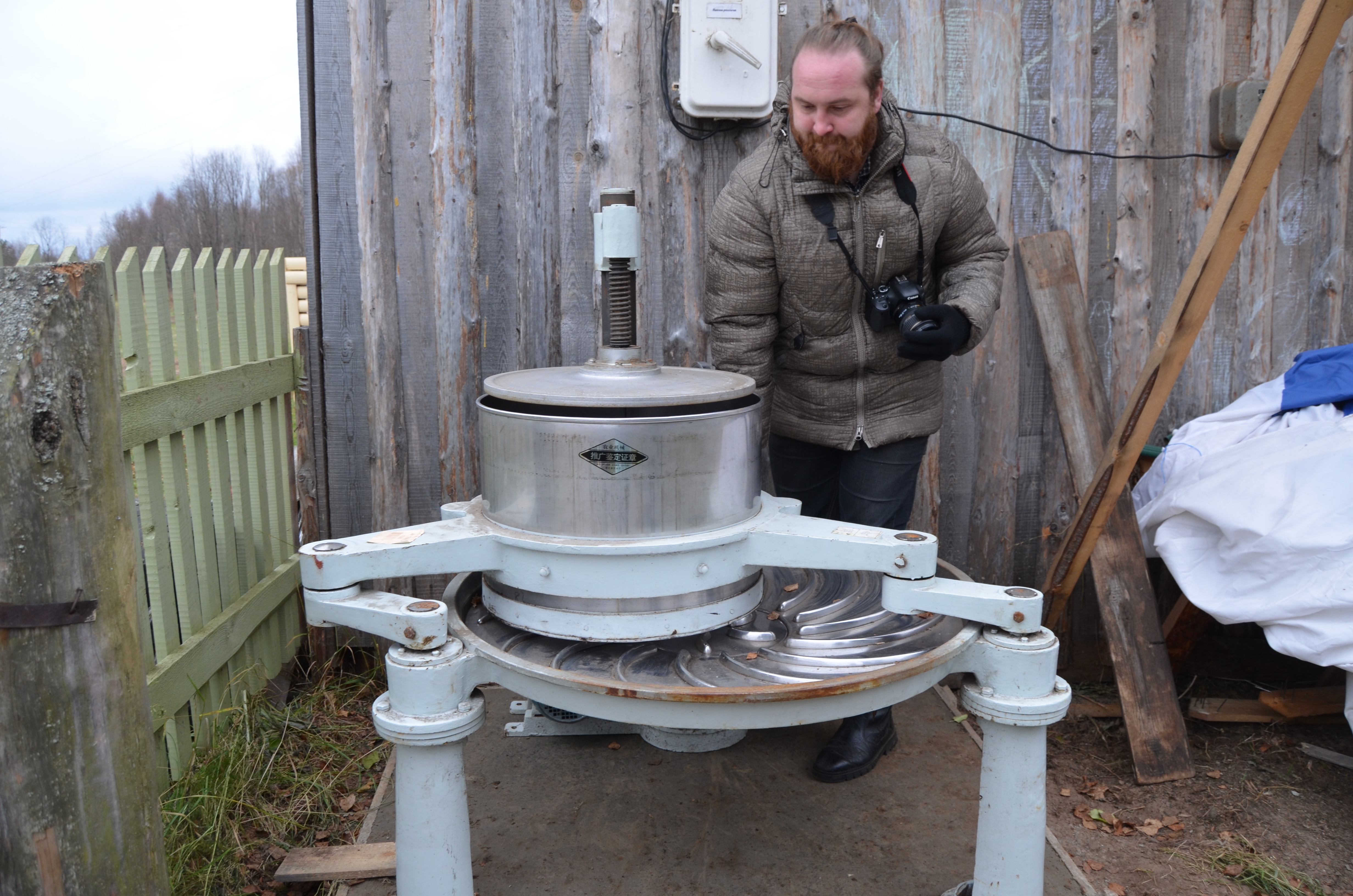
A visit to some Arkhangelsk fire-souls regenerating self-sufficiency and village culture in the face of urbanization.
We have been on an artist´s residency in Arkhangelsk, North-Eastern Russia, a region which has been strategically important since medieval times as a trading outlet to Europe and has strong ties to Norway. We are developing a documentary on
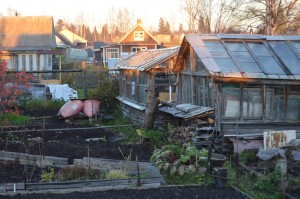
regenerating self-sufficiency which we researched during the 3 weeks. In the city of Arkhangelsk which borders The White Sea we visited a friends dacha area where people escape the city and in this creative haven of individuality and grow their own produce. Eva did a worksh
op on her work with fermentation at the artists centre and we were well looked after by the Barents artists.
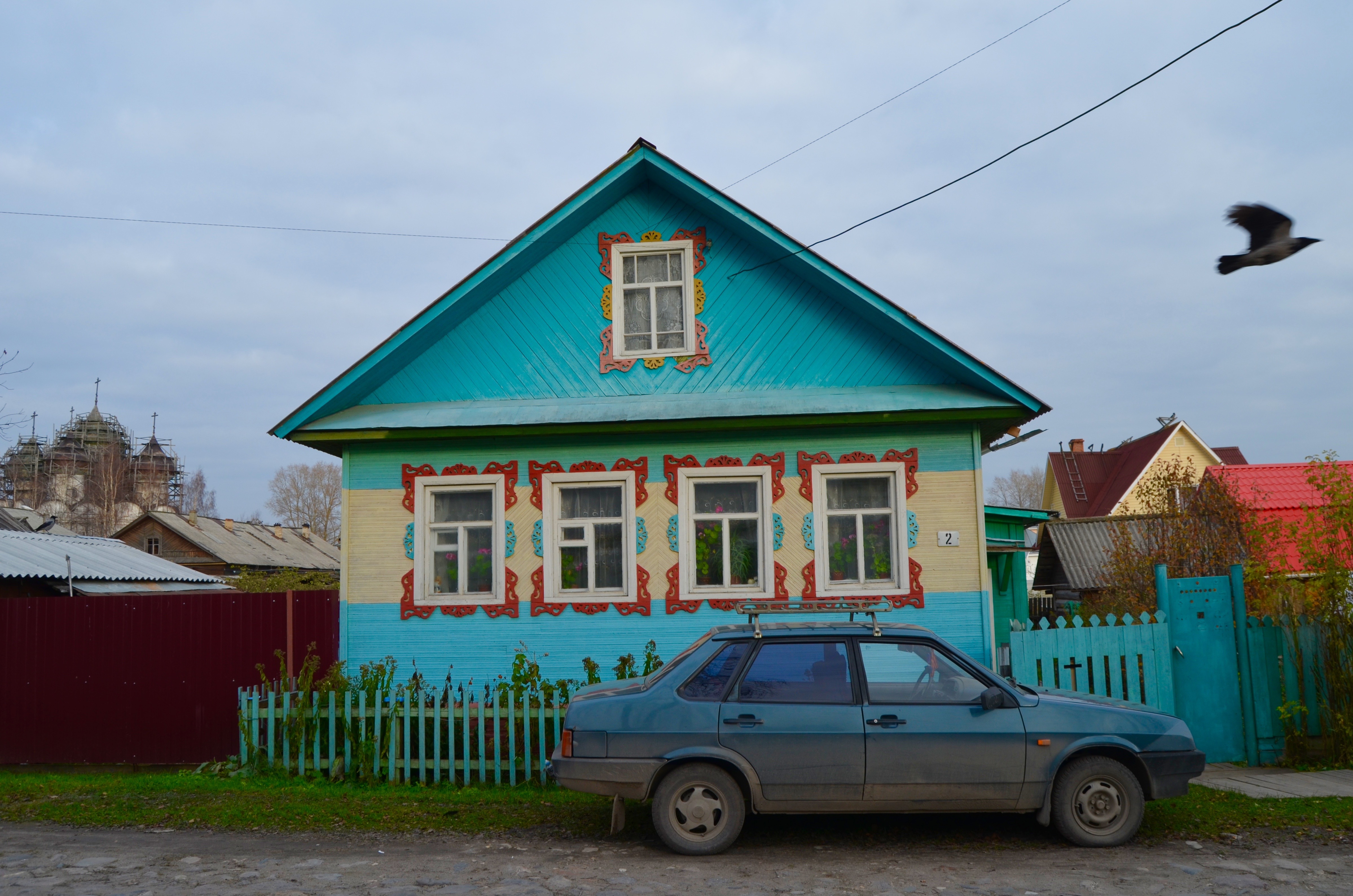
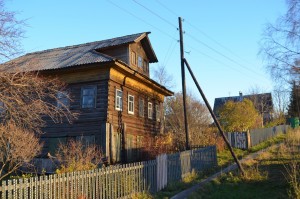
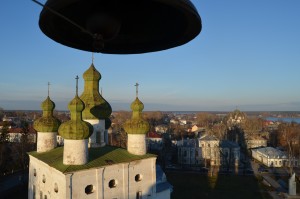
After a week we travelled 10 hours south to beautiful Kargopol on the Onega river to see the timber buildings and famouse churches being restored after decades of neglect.
We then trained overnight east (we love Russian trains) to Kizema followed by a journey down muddy rutted roads to the almost depopulated former soviet village Tarasovskaya in Ustyansky region.


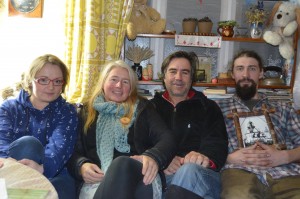
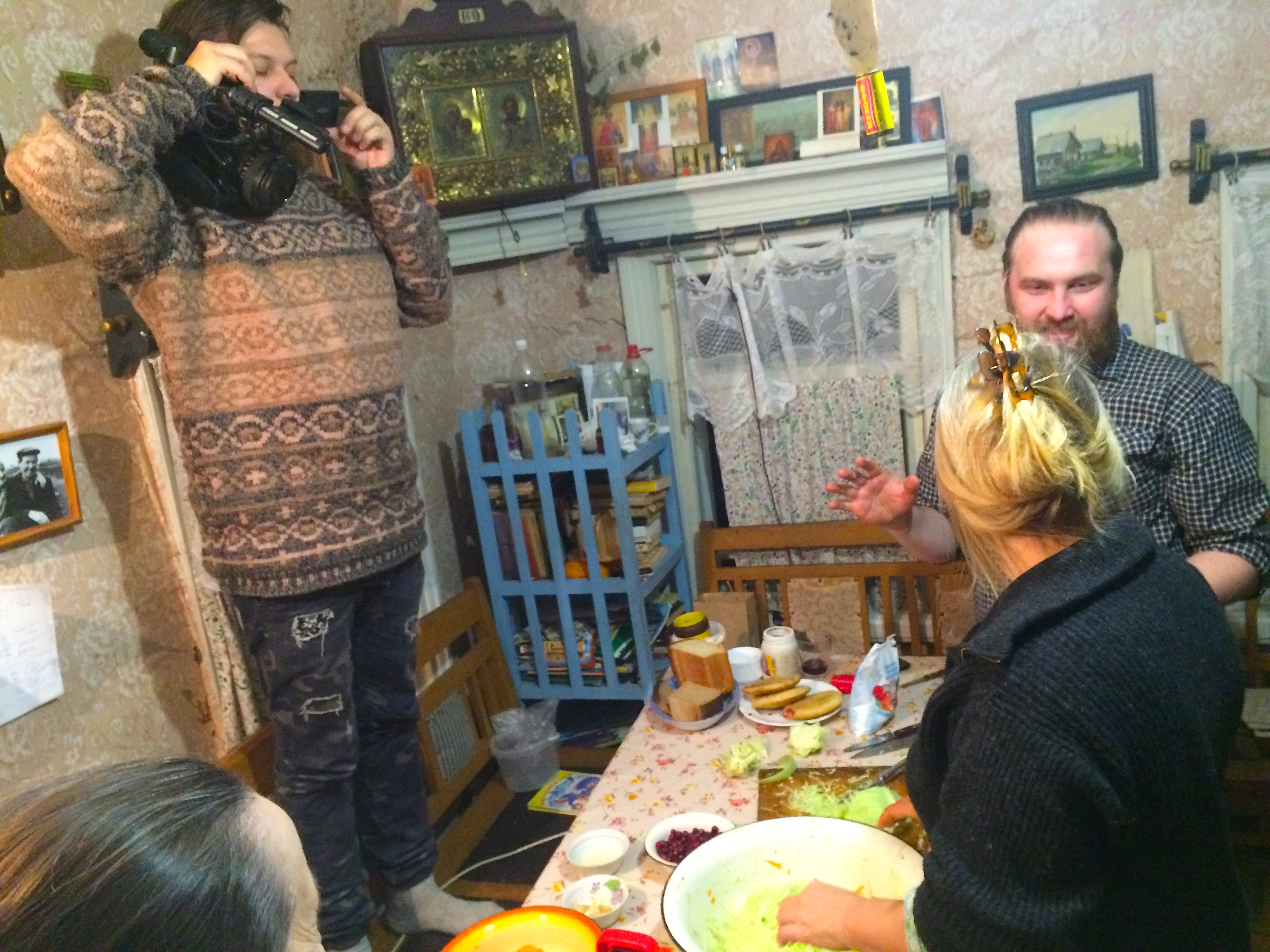
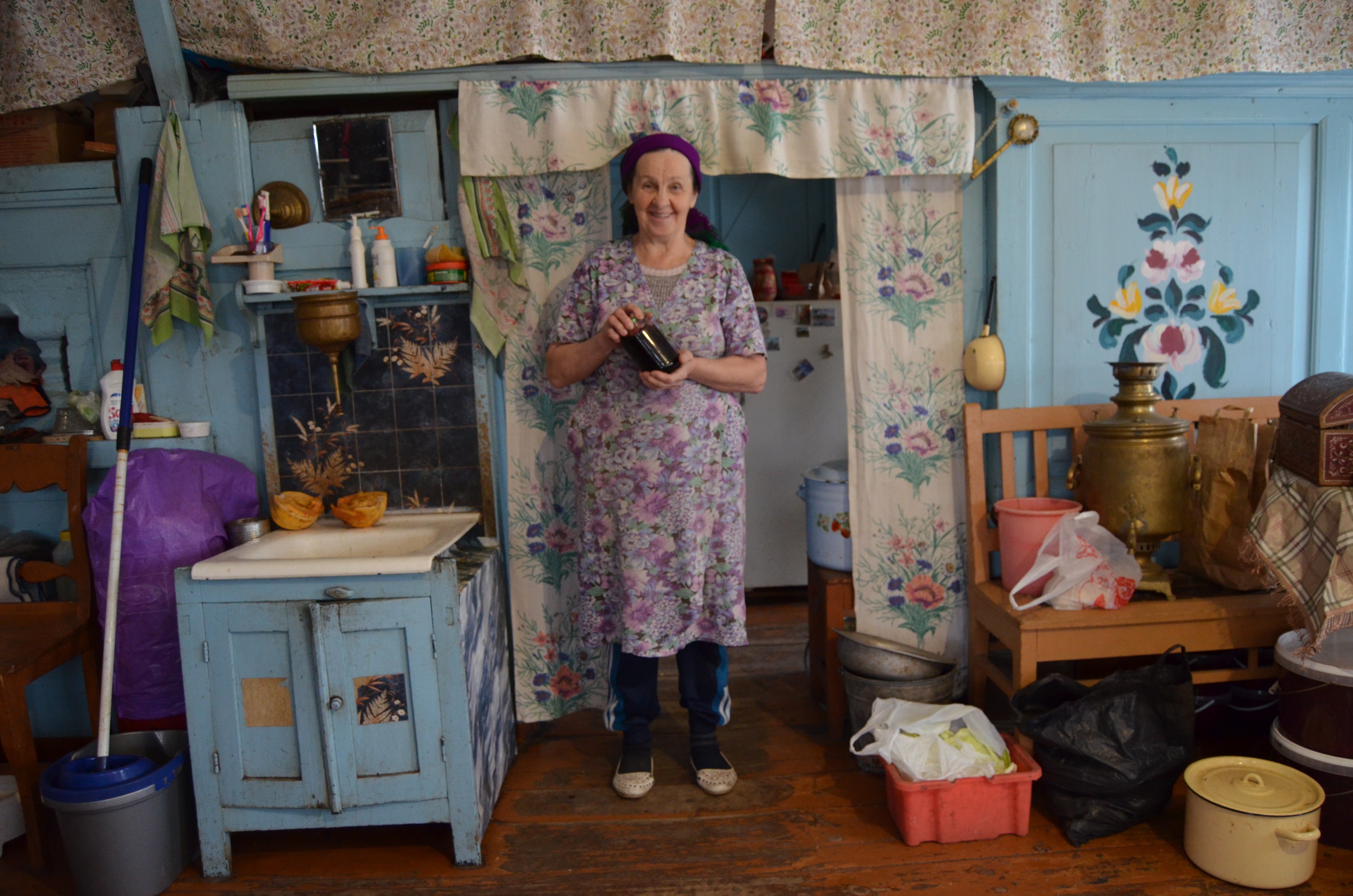
We then travelled back west 5 hours to Shenckursk where the industrious Бронский family of several generations produce and sell rose-bay willow herb tea, keep a cow and horse and bake daily on their traditional Russian oven. Their long warrenous traditional log house is home to all of this: We made kampooch, cheese, whey bread, milked the family cow, had a sauna and were warmly welcomed into family life, hard work, good food and good fun.


Thank you to everyone who hosted us for generous hospitality and guidance in ever fascinating, fast changing Russia and of course to the Hight North Residency program http://www.highnorthair.org and the Barents Secretariat www.barents.no
HATS sommerleir
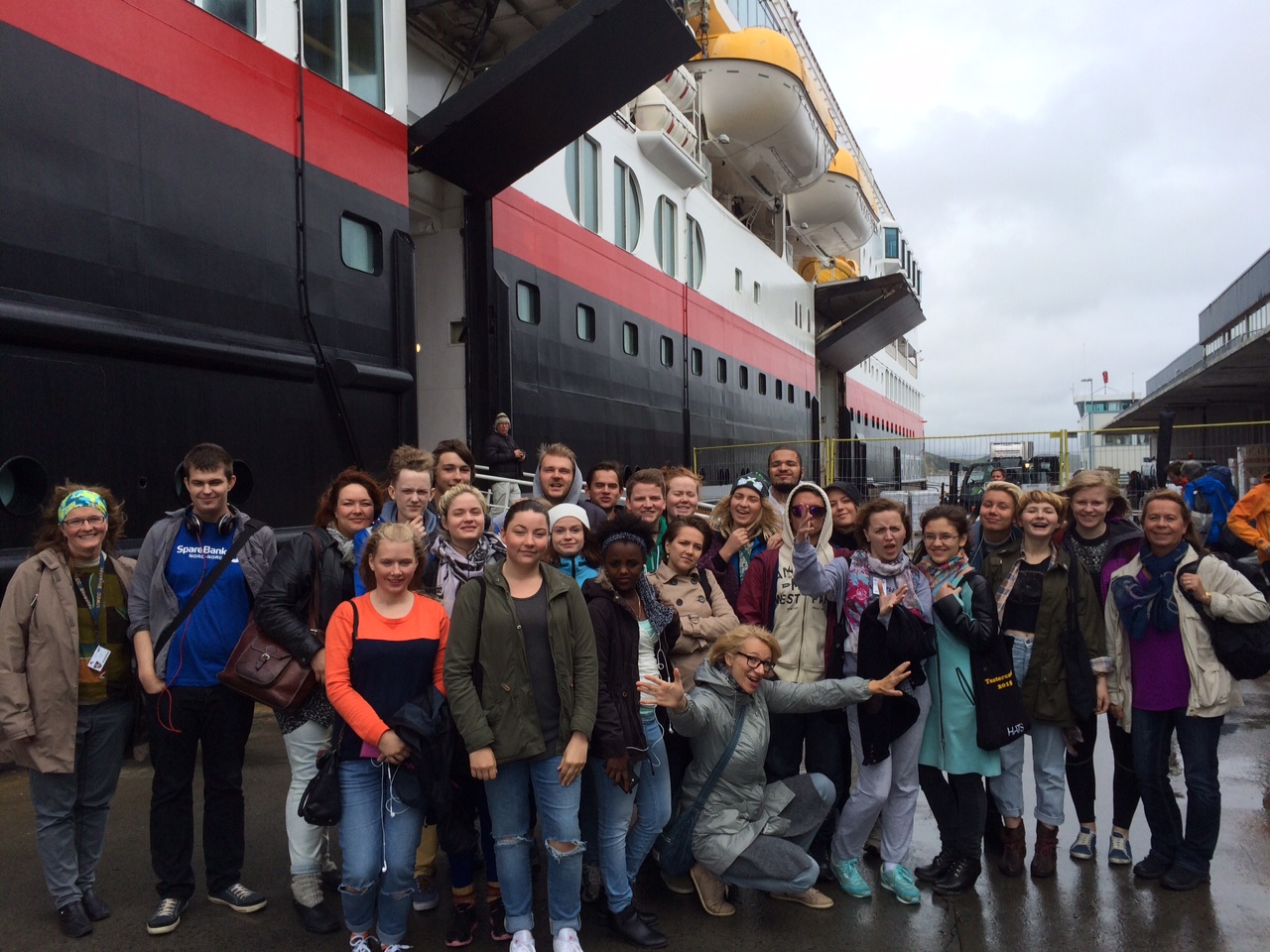
This summer I taught filmmaking for the week at Hats.no fantastic summer camp for youth from Northern Norway and Russia at Nesna, Nordland. We made two multi media performances with the drama instructors Joanna Magierecka and Eline Petrine Johansen, took the Hutigruta to Sandnessjøen and learnt about each others cultures. I have a short film of the week here https://vimeo.com/159380149
Breath
The stunning short film Breath which Onward is producing for the Norwegian artist Eva Bakkeslett had its premier this month at Nord-Norsk Kunstnersenter in Svolvær, North Norway. The film is in competion in the Norwegian film festival Grimstad in June.
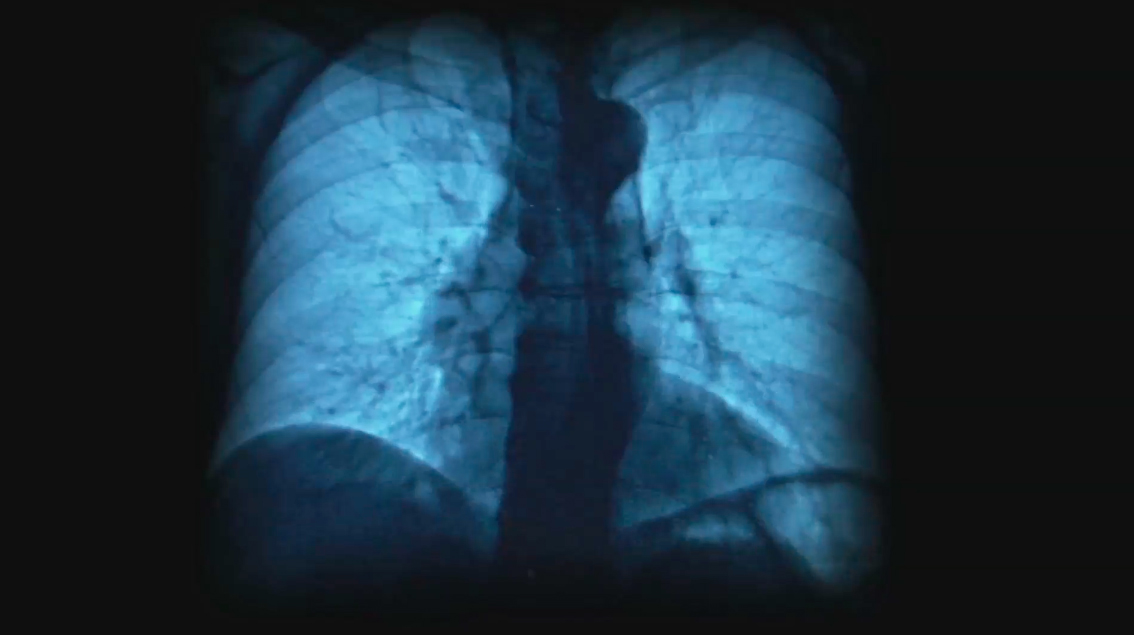
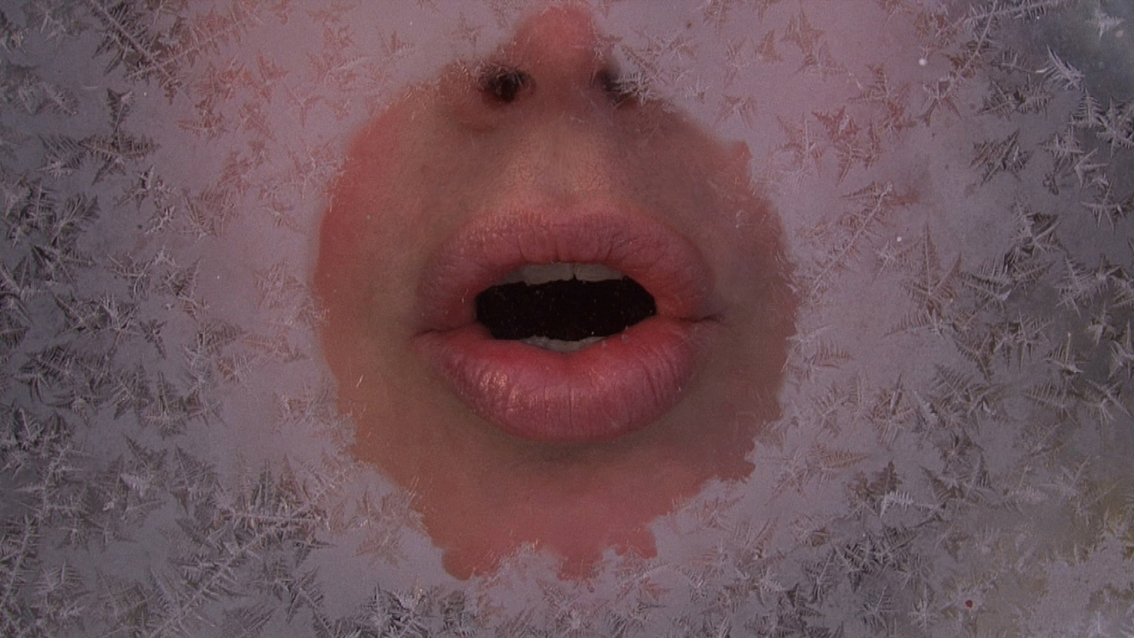
Breath is a film about the poetic journey of air that surrounds us and flows through us continuously. We breathe the ethereal force of life through our bodies. Every creature inspire and transform the air and add some of their own entity in the mixture before it is passed on. We all share each other’s breath.
Breath reveals the invisible connection that forms the essence of life and binds everything living into an inseparable network. The breath leads the way through the ever changing journey – invisible but present, moving and reshaping, rhythmic and regular, a part of you but only for a fleeting moment before it enters another human, an animal, a plant or transforms itself into a cloud. Air that has travelled over continents, imbibed birds and animals, rustled in leaves, billowed through pipes and flowed through earth and ocean.
Inspiration and spiritual connections are exhaled by the carefully selected voices of philosopher and writer David Abram, physicist and systems thinker Fritjof Capra, physicist and activist Vandana Shiva, biologist and lecturer Stephan Harding and yogi Sudhir Tiwari resonating throughout the film.
Fra Østen til Huttiheiti
Work in progress: documentary.
The seeds for this project were sewn in the 90´s when I learnt Norwegian in Tromsø with amongst others, several asylum seekers from the first Iraq war.
In 1 line: Filmed in their workplaces, Middle Eastern asylum seekers´ meetings with Norwegian culture and stories from their home countries, challenge our conventional media narrative and creates a positive picture of immigration.
Vi møter fem asylsøkere fra Midtøsten i ulike deler av Norge i løpet av et år. Vi blir kjent med de medvirkende på et personlig plan og tar del i de kulturelle, økonomiske og personlige utfordringene de opplever ved å bo og integreres i det norske samfunnet. I filmen drøfter de sine erfaringer av hendelser i hjemlandet og sammenligner disse med hvordan de blir fremstillt i norske media.
We will meet five people from Iraq, Iran, Palestine and Syria, mostly at work with the public, in areas throughout Norway in summer and winter. They will tell us about their lives whilst they go about their jobs in places such as restaurants, shops and taxis, interacting with customers and visiting their homes. We will get to know the subjects on a personal level and discover the issues they face living and integrating into Norwegian society, culturally, economically and domestically. They will also talk about why they came to Norway and how peoples understanding of the Middle East and what they watch on TV compares with their own experiences from the region which will be illustrated by mobile phone and youtube footage.
Though asylum seekers have richly educating and fascinating stories to tell, for a variety of reasons, inquiry is insensitive and taboo. Yet they add depth to and challenge the perception of the Middle East we develop from the Western orientated explanation of events and wars we receive from the media. Our better understanding of integration challenges and the plights of asylum seekers, as victims of global politics rather than incomers from a threatening region, could undoubtedly reduce prejudices and increase respect.
Budapest
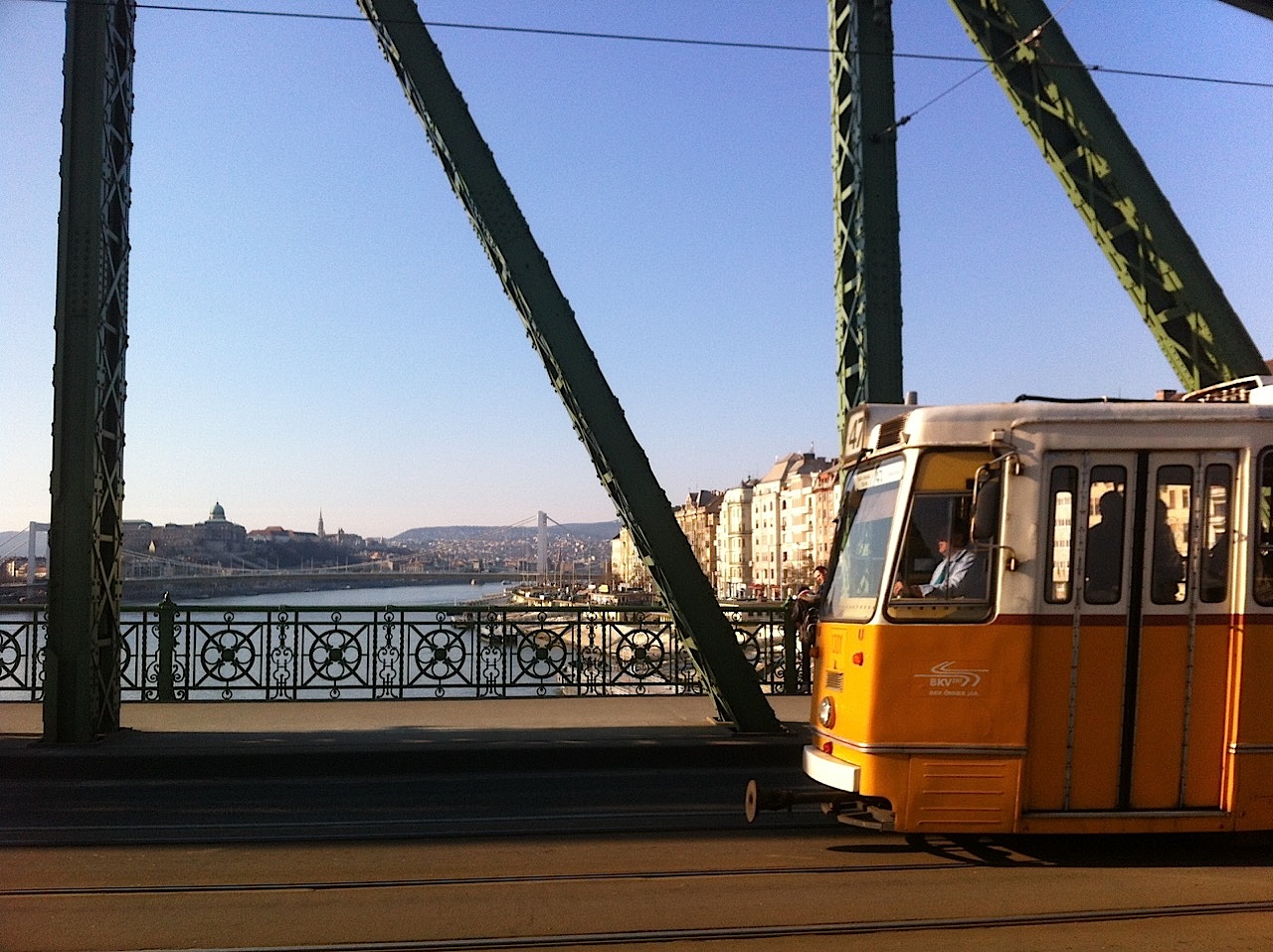
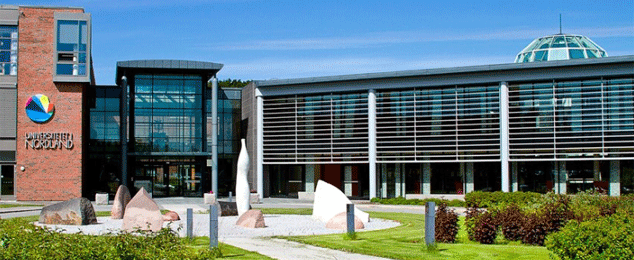
I recently visited Budapest to interview László Zsolnai for a film I am making for Universitetet i Nordland, Centre for Ecological Economics and Ethics celebrating their 10 year anniversary. They work closely with László at Corvinus University of Budapest and visit the city annually with the students. The interview went really well in his beautiful study. After deciding how they work together he talked about his work with “Ecology, Ethics, and the Limits of Business,” in Bergen, his book The Future International Manager: A Vision of Roles and Duties of Management, and The Palgrave Handbook of Spirituality and Business and the new values for business and management: frugality, deep ecology, trust, reciprocity, responsibility for future generations, and authenticity. He also talked about his new book “Beyond Self: Ethical and Spiritual Dimensions of Economics”.
László has lived in 14 countries and his favorites are Norway Italy and UK, 2 of which I live in at the moment. Budapest has the most amazing position on the Danube and though parts are very grand, others reminded me of visiting Eastern Europe in 1989 on my way back from Hong Kong, all by train. The city is the kind of city you can just wander around in and guarantee to find interesting streets devoid of consumer homogeny. Spring was coming to the city, coats were unnecessary during the middle of the day and as I write this in a full gale back in Northern Norway it all seems a long way off. The students on the Økologisk økonomi masters from Universitetet i Nordland must have an amazing week.
HATS Webvideo
I travelled up to Pasvik on the Norwegian/Russian border this summmer for Hålogaland Amatørteaterselskap´s (HATS) annual summer camp to make a webvideo about the week for them to market their youth drama courses.
The students were in on the scripting and sound recording and I have now cut 2 versions including a 14 minute mini doc which we are sending to festivals;
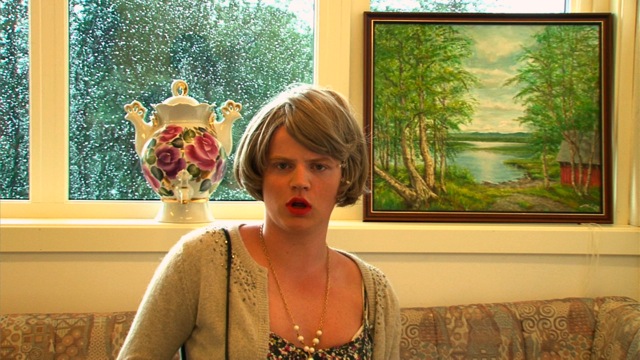
“In far north-eastern Norway, at Pasvik Følgehøskole on the Norwegian/Russian border, youths from northern Norway and Russia meet for an annual theatre camp. In the wake of Pussy Riot and Russia´s recent antigay bill, the theme this year is justice. They explore cross dressing and each have to invent their own character of the opposite sex. Without a common language, communication is difficult, helped only by the participatory environment of amateur theatre and a participants sister roped in as translator. This short documentary focuses on their struggles and feelings about being the opposite sex for a week and their expectations and presumptions with meeting their neighbours across the border.”
Ecological Economics
I am very honored to have been asked by Ove Jakobsen and Universitetet i Nordland,
Centre for Ecological Economics and Ethics, to make a film